Key Takeaways:
- Health education degrees offer careers in schools, public health departments, and nonprofits.
- Graduates can work as health educators, community health workers, or health program coordinators. They design and implement programs to promote wellness, manage public health campaigns, and provide education on various health topics.
- These roles often involve collaboration with healthcare professionals and community organizations to improve overall health outcomes. Advanced degrees may lead to positions in research, higher education, or healthcare administration.
Health education–often referred to as human services–is a social science that incorporates interdisciplinary research to promote health and general well being while also combating disease and other negative outcomes of poor health. Depending on the role of the particular health education professional, these specialists work with individuals, groups, or entire communities to remedy environmental or systemic pressures that might negatively impact one’s personal, social, or professional life.
A career in health education manifests in many different forms–from a community project management, to health education in school systems and corporate environments, even to organizing state-level initiatives. As implied by this wide range of professional outcomes, a career in health education is extremely flexible.
What one health education professional does might only slightly resemble the work of another. And these diverging paths of health education professions begin in school. That is, the direction of each individual health educator’s career is established, at least in part, early on through degree programs and certifications.
Related:
- Best Entry-Level Healthcare Degrees
- Top Healthcare Certifications to Boost Your Job Prospects
- Top Careers for Master’s in Health Administration Graduates
2026 Job Outlook for Health Education Careers
The demand for health educators, community health professionals, and allied health specialists continues to rise in 2026, driven by population needs, technology adoption, and a growing focus on preventive care. According to the latest Bureau of Labor Statistics (BLS) projections, health education remains one of the strongest growth areas in public and community health, with job expansion well above the national average.
Health Educators & Community Health Workers
- Projected Growth (2026): 7–13%, depending on specialization
- Schools, nonprofits, hospitals, and public health agencies report ongoing shortages of trained educators who can deliver prevention-focused programs, culturally competent communication, and health literacy initiatives.
Health Informatics & Digital Health Roles
- Projected Growth: 15–27%
- As more organizations adopt EHR systems, telehealth workflows, and data-driven decision-making, employers increasingly seek health educators with digital health, data literacy, or informatics experience.
Allied Health Professions (Overall Trend)
- Projected Growth: 26% — one of the fastest-growing categories in healthcare
- Many allied health positions now integrate patient education, community outreach, and prevention strategies—skills directly connected to health education training.
Key Drivers of 2026 Workforce Demand
- Aging Population: More chronic conditions require ongoing education, prevention, and care coordination.
- Rising Rates of Chronic Disease: Diabetes, hypertension, obesity, and behavioral health conditions are increasing, creating greater need for prevention-focused professionals.
- Behavioral & Mental Health Needs: Schools, community centers, and healthcare systems report shortages of professionals trained to address mental wellness and prevention.
- Expansion of Digital Health: Telehealth, remote monitoring, and digital patient engagement tools require educators who can guide patients through virtual care.
- Preventive Care Emphasis: Federal, state, and private payers are investing more in prevention, health promotion, and education programs.
- Shortage of School & Community Health Educators: Districts and public health departments increasingly struggle to fill roles due to retirements and growing student needs.
Health Education Degree Pathways (Associate, Bachelor’s, Master’s)
| Degree Level | Who It’s For | Time to Complete | Typical Careers |
|---|---|---|---|
| Associate (AS) | Entry-level community educators | 2 years | Support roles |
| Bachelor’s (BS/BA) | Most common requirement | 4 years | School & community educators |
| Master’s (MEd, MPH, MHS) | Leadership & specialization | 1–2 years | Directors, program managers |
| Doctorates (PhD, DrPH) | Research & academia | 3–5 years | Professors, policy leaders |
What is an Education in Human Services / Health Education?
Health education is considered by many health professionals to be a career of honor much like teaching, and is therefore one of the best health degrees to consider. Health education is similar to a health science degree (what can I do with a degree in health science?) except with an emphasis on education. Though the exact format of your degree program will depend mostly on your desired career trajectory.
While there are certainly Associate’s degree options for health education, many certifications and employers will require at least a baccalaureate degree. That is not to say one cannot find employment or professional success with an Associate level education, however it is safe to say that the traditional route of health education will lead to a Bachelor’s or Master’s degree.
What do Health Education Degree Programs Look like?
With this in mind, what will a traditional education look like? Most undergraduate and graduate programs in health education have set standards that are common between programs at different universities, such as requiring the completion of practicum or internships. The common thread here is that health education programs require engagement with one’s community, and–depending on the specialization of the program–with certain populations in need.
If you are interested in a career in healthcare, but are unsure if health education is the best fit or want to explore the specifics, check out our healthcare degree FAQ for a list of healthcare professions and their degree requirements. Also check the resources below for information on available healthcare degrees and the careers they lead to.
Essential Health Educator Skills & Competencies in 2026
As the healthcare landscape evolves, employers increasingly seek health educators who bring both core public health competencies and modern digital, data, and behavioral skills. These 2026 competencies highlight what hiring managers now expect—and what helps graduates stand out in a fast-growing field.
Below are the top health educator skills and competencies in health education for 2026.
Health Communication (Still the #1 Required Skill)
Health educators must clearly explain health concepts to diverse populations, whether in schools, clinics, or community programs. This includes writing, public speaking, digital communication, and simplifying complex medical information.
Cultural Competence & Community Awareness
Employers increasingly require professionals who can work effectively with diverse populations. Cultural competence helps educators build trust, tailor programs, and address health disparities—especially in underserved communities.
Program Planning & Evaluation
One of the core competencies in health education is the ability to design, implement, and assess health initiatives. This includes:
- conducting needs assessments
- setting measurable objectives
- evaluating program outcomes
- reporting results to stakeholders
These skills are vital for roles in public health agencies, nonprofits, and schools.
Data Literacy (A Top 2026 Trend)
Data skills are now essential for health education careers. In 2026, employers expect graduates to:
- interpret community health data
- read dashboards and analytics tools
- measure program impact
- use data to justify funding or policy recommendations
Even basic proficiency with Excel, EHR data, population health metrics, or social determinants dashboards is a major advantage.
Digital Health Tools & Technology Integration
Health educators increasingly work with:
- telehealth platforms
- digital patient engagement tools
- mobile health apps
- virtual education tools
- online survey platforms
Understanding how to use—and teach others to use—these tools is a highly marketable skill.
Behavioral & Mental Health Knowledge
With rising national demand for behavioral health support, educators must understand:
- motivational interviewing
- behavior change theories
- trauma-informed communication
- mental health first aid
These competencies prepare graduates to work in schools, community agencies, and integrated care settings.
Grant Writing & Funding Development
Nonprofits, community health programs, and public health departments rely on funding. Health educators with grant writing skills are more competitive for leadership and program development roles.
National Certifications for Health Educators in 2026
Earning a nationally recognized certification can significantly strengthen your résumé, improve credibility with employers, and unlock higher-paying roles in community health, public health, corporate wellness, and healthcare systems. Below are the most in-demand health education certifications for 2026, including requirements, exam details, and who each credential is best for.
CHES® — Certified Health Education Specialist
Administered by: National Commission for Health Education Credentialing (NCHEC)
What it Demonstrates: Mastery of the Seven Areas of Responsibility for Health Education Specialists—including assessment, program planning, implementation, and evaluation.
Requirements:
✔ Bachelor’s degree
✔ Major or significant coursework in health education (25+ semester credits)
✔ Final-year students may sit for the exam
Exam Details:
- 165 questions (150 scored)
- Offered twice per year (April & October)
- Covers health education assessment, planning, implementation, evaluation, resource management, and advocacy
Best For:
Students or early-career professionals who want foundational health educator credentials for roles in schools, nonprofits, community health, public health agencies, and corporate wellness.
MCHES® — Master Certified Health Education Specialist
Administered by: NCHEC
What it Demonstrates: Advanced expertise in leadership, research, program evaluation, and health education strategy. This is the senior-level credential following CHES®.
Requirements:
Option A: Current CHES® + 5 years of experience
Option B: Master’s degree in health education or a related field + 25+ grad-level credits in health education
Exam Details:
- 165 questions
- Offered twice per year
- Focuses on advanced-level assessment, leadership, evaluation, and strategic planning
Best For:
Mid-career or senior health educators seeking advancement into leadership, policy roles, research coordination, or managerial positions in public health, healthcare, and education settings.
CPH — Certified in Public Health
Administered by: National Board of Public Health Examiners (NBPHE)
What it Demonstrates: Mastery of public health core competencies beyond health education—epidemiology, biostatistics, environmental health, policy, and leadership.
Requirements:
✔ Graduate degree from a CEPH-accredited school
OR
✔ Bachelor’s degree + 5 years of public health work experience
OR
✔ Completion of 42 CEPH-approved prerequisite credits (for students in pathway programs)
Exam Details:
- 200 multiple-choice questions
- Measures knowledge across 10 public health domains
- Computer-based, offered year-round
Best For:
Health educators wanting to transition into broader public health careers, epidemiology support, program leadership, analytics roles, or government positions.
Health Coaching Certifications (Growing Rapidly in 2026)
Because of the rise in chronic disease management, mental wellness, and preventive health, health coaching credentials are among the fastest-growing certifications for health educators.
Top recognized options include:
NBC-HWC — National Board Certified Health & Wellness Coach
The gold standard for professional health coaching.
Requirements:
✔ Approved training program
✔ 50+ coaching sessions
✔ Bachelor’s degree recommended
Exam Details:
- 150 scored questions
- Focus on behavior change, motivational interviewing, coaching structure, and ethical practice
Best For:
Educators working in corporate wellness, lifestyle medicine, behavioral health, primary care integration, or community health coaching.
ACE Health Coach Certification
Administered by: American Council on Exercise
More accessible, widely recognized in corporate and fitness settings.
Requirements:
✔ High school diploma minimum
✔ Healthcare or wellness experience recommended
Exam Details:
- 150 questions
- Behavior change, nutrition, physical activity, coaching communication
Best For:
Entry-level or early-career health educators and wellness professionals.
Wellcoaches® School of Coaching Certification
Requirements:
✔ Bachelor’s degree or healthcare license
✔ Extensive training modules
Exam Details:
- Written + practical exam
Best For:
Professionals working in clinical settings, hospitals, and integrated care teams.
Related Resources
General Health Degrees & Career Information
- 5 Best Paying Medical Careers without a Master’s
- What Can I Do with a Degree in Health Science?
- What Can I Do with a Long Term Care Medical Degree?
- What Can I Do with a Healthcare Administration Degree?
- What Can I Do with a Healthcare Management Degree?
- What Can I Do with a Health Informatics Degree?
- What Can I Do with a Medical Billing and Coding Degree?
- What Can I Do with a Nuclear Medicine Technologist Degree?
Health Oriented Associate’s
- 5 Great Medical Careers with an Associate’s Degree
- What Can I Do with a Medical Assistant Associate’s Degree?
- What Can I Do with a Medical Billing and Coding Associate’s Degree?
- What Can I Do with an Associate’s of Health Information Technology?
Health Oriented Master’s and Career Information
- 5 Great Medical Careers with a Master’s Degree
- What Can I Do with a Health Science Master’s Degree?
- What Can I Do with a Master’s in Nutrition?
- What Can I Do with a Master’s in Public Health?
- What Can I Do with a Master’s in Healthcare Administration?
- What Can I Do with a Master’s of Science in Nursing?
- What Can I Do with a Master’s of Health Informatics?
Health Oriented PhD and Career Information
- What Can I Do with a Health Management and Policy PhD?
- What Can I Do with a Community Health Education PhD?
What are the Most Common Career Settings of Health Education?
As mentioned in the introduction, health education is a broad field of many diverse career paths. Among which are settings that might be of particular interest to prospective professionals and might warrant a specific focus of study during their education. Below are the seven most common settings.
Community Health Education
Health educators who work in the community setting will focus their efforts on programs that will deliver the most good to the most people within said community. If, for instance, the community is highly impoverished, a health educator might work on a program on connecting community members with the healthcare they need.
Similarly, many community-oriented health educators direct their efforts toward minimizing the negative effects of alcoholism and substance abuse, unplanned pregnancy, or other self-induced problems. These professionals engage in community outreach and intervention by spreading helpful information and educating key members in the community.
See – What Can I Do with a PhD in Community Health Education?
Common Job Titles within this Setting
- Community Health Educator
- Prevention Specialist
- Alcohol and Substance Abuse Educator
- Family Services Specialist
- Community Resource Coordinator
Health Education in Business
In America’s 2020 businesses and international corporations alike are held to a higher standard of employee health and satisfaction. One’s work environment should not be unhealthy or toxic to one’s mental health. Health educators work within the business setting to ensure that both employers and employees are well educated on important topics.
These professionals might develop a company-wide health initiative, plan a business’ wellness retreat, or conduct seminars on combating unhealthy behaviors in the workplace. Health educators often work as consultants for businesses who have a specific need, though they often find employment in large corporations with large numbers of employees as well.
Common Job Titles within this Setting
- Wellness Consultant
- Integrative Health Educator
- Corporate Health Trainer
- Cultural Competency/Sensitivity Trainer
- Health Media Director
Health Education in Non-Profits

Non-profit organizations embody an amazing sentiment: forgoing corporate profit-mongering in lieu of propagating a social cause or advocating for a progressive change in a community, or in governmental policy. Because nonprofits require the utmost in efficiency and productivity in order to run effectively, health educators play an important role.
Health educators typically work in the nonprofit sector in one of two capacities–that is, they either work to directly improve the working conditions for the non-profit, or they work as an instrument of change in communities for the nonprofit. In other words, health educators usually work on-site at the nonprofit or they engage in outreach by carrying the nonprofit’s message.
Common Job Titles within this Setting
- Health Literacy Educator
- Health Specialist Grant Writer
- Alcohol and Substance Abuse Education Coordinator
- Clinical Researcher / Clinical Research Coordinator
- Employee Wellness Coordinator
Health Education in Schools
School aged children are often the most vulnerable to many forms of illness and disease. This fact combines with the fact that school systems represent the ideal breeding grounds for bacteria, viruses, and even forms of contagious behavioral illnesses. The resulting reality is that school districts are straddled with an enormously difficult burden of protecting students from such negative outcomes.
Health educators work closely both in schools, school boards, and panels to establish policies and enact initiatives designed to curtail any threats to student safety or health. The focus of these health educators is typically that of K-12 school settings.
Common Job Titles within this Setting
- School Health Educator
- District Wellness Coordinator
- Youth Outreach Coordinator
- Youth Program Director
- Head Start Health Specialist
Health Education in Academia
The needs of school aged children differ drastically from the needs of college aged students and adult learners at university. For this reason, health educators take on entirely different roles when working in this setting. And for the most part their roles can be categorized into different approaches.
One group of health educators works with universities as a client, that is, they help to educate both students and faculty, develop on-campus programs for health education, and ensure student health is considered in university policies and programs. The other group of health educators work with universities as an employee. These professionals work either as health education faculty, or work within student services to fill a specific role educating both faculty and students.
Common Job Titles within this Setting
- Assistant Professor / Professor
- Curriculum Development Coordinator
- University Health and Wellness Consultant
- Education Director
- Education Outreach Program Director
Health Education in Government
When considering the health of individuals and communities, a primary infrastructure of concern is that of the government. That is, when seeking out the health and betterment of people there are few power structures with more influence, and perhaps more importantly, few power structures have more responsibility to use this influence to enact positive change.
For this reason, many health educators find successful careers in government at the state or federal level. These educators can work closely with policy makers to ensure that it encourages health and wellbeing of people, communities, and the environment. These educators also work closely with government bodies as clients in order to ensure that government employees have healthy work environments, are educated against unhealthy behaviors, and knowledgeable in the prevention of disease and illness.
Common Job Titles within this Setting
- Environmental Health Educator
- Health Department Director
- Health Program Advocate
- Infection/Disease Prevention Specialist
- Accreditation Coordinator
Health Education in Healthcare
It might be counterintuitive that health educators would play such a vital role in the healthcare industry, but their task is a indeed crucial one. While most professionals in the healthcare industry have specialized medical knowledge of some sort, their knowledge is more focused on their craft as a doctor, surgeon, nurse, etc.
Thus it is common for these professionals to lack knowledge about what is best practice for their behavior as employees of hospitals who interact with people both inside and outside of work. Given the health risks associated with these things, health educators take on the role of educating healthcare professionals on the proper procedures and protocols for upholding a high standard of health.
As it is in many other professional settings, these health educators might work in a hospital as an employee by ensuring patients and clients are given quality care, or work with the hospital as a client by educating its staff in key areas. Which direction one takes will depend on the size of the healthcare organization, the specialization of one’s work, and one’s education level and resume.
Common Job Titles within this Setting
- Medical Resource Manager
- Prevention Specialist
- Nutrition Services Coordinator
- Patient Care Coordinator
- Patient Education Director
What are the Professional Associations of Health Education?
Besides offering top-end employment for exceptional health educators, professional associations provide an abundance of resources for both active professionals in the workforce and for students engaged in a degree program. Enrolling in a membership grants access to medical journals, professional development opportunities, as well as networking events. So with this in mind, let’s breakdown the most prominent professional associations.
Society of Public Health Education (SOPHE)
SOPHE represents health educators both across the United States and throughout the larger world. This association promotes healthy living guidelines for cultures both local and abroad by conducting massive research and community engagement initiatives. SOPHE organizes national conferences and conventions throughout the year.
American Public Health Association (APHA)
APHA is present in more than 40 countries to raise the quality of living and standards for community wellness. This international presence is the fueling force behind its growing body of research archived in its medical journal. Given the size of this Association, there are a large number of professional opportunities available both directly and indirectly through APHA.
Health Care Education Association (HCEA)
HCEA differs from the other two organizations in that its primary focus is a commitment to healthcare. This commitment is delivered through a multidisciplinary approach where educators prioritize the propagation of information in regards to patient, consumer, and family in the context of healthcare. That is, this association works closely with the healthcare infrastructure in America to ensure that its institutions function as organizations and also as care providers.
Where Can You Go with a Health Education Degree?

While some health education careers require specialized education like that of nurse education (how to become a nurse educator), other careers are wide open to exceptional professionals. Similarly, some advanced degree programs will only accept applicants with the most focused and exemplary backgrounds. Given how this information might guide decisions early in one’s career, we will go over these career goals and career resources now.
Doctorate Level Education
Doctorate level degree programs only accept top candidates. And becoming a top candidate takes years of preparation and due diligence in education programs. That is you must demonstrate academic thriving in your associate’s, bachelor’s, and master’s programs.
With that in mind, here are some doctoral programs you can work towards:
Community Health Education PhD
What Can I Do with a PhD in Community Health Education?
Health Management and Policy PhD
What Can I Do with a PhD in Health Management and Policy?
Find a Hotspot for Healthcare Education Jobs
Not all healthcare professions are created equal (see 10 best healthcare careers for the future or 5 Healthcare Jobs In-Demand). While healthcare education is certainly a strong field and is projected to grow at above average rates through the next five years, the best opportunities will be located in the areas of the country with thriving healthcare industries.
With that in mind, be sure to explore the best cities for healthcare jobs. But for the most part the best healthcare jobs are in large urban centers with robust state funding. These kinds of cities leverage infrastructure to provide a higher standard of healthcare to its locals–and this is where healthcare educators come in.
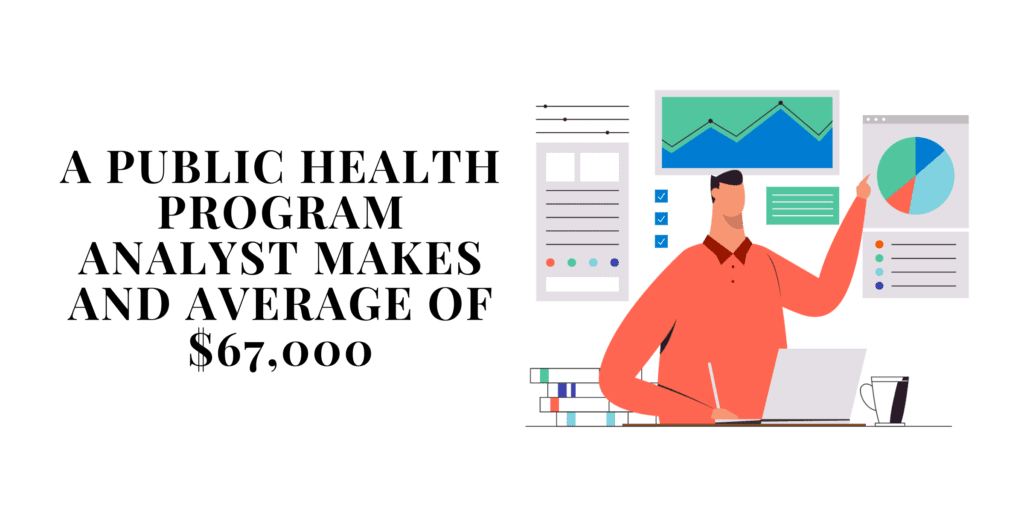
5 Top-End Salaries of Health Education Careers
Healthcare careers are known for providing some of the most stable and lucrative jobs in the American job market. Not all careers are created equal however, and for many prospective professionals there are few factors more important than salary. There is nothing wrong with valuing salary, especially when it comes through a career that one loves.
Below are some of the most lucrative jobs within health education. Though it should be noted that some of these positions will only be attainable by those who have established the necessary specialization and expertise–some of which might be wholly attainable in a degree program, while some may not. Similarly, these figures represent the top-end percentiles of salaries within a field, and as such will not be representative of average earnings.
Public Health Attorney
Top-End Earnings: $208,000
Public health attorneys combine the skills of a lawyer with those of a public health activist in order to raise the living quality and standards of health for individuals and communities alike. These legal professionals are both able to fight predatory policies in court while also promoting beneficial policies through building political affiliations and inciting government initiatives.
Health education professionals will need to earn a law degree in order to work towards this career path, however their background in health education and public health administration will be equally crucial.
Medical Services Manager
Top-End Earnings: $219,080
Also known as healthcare managers or healthcare executives, these professionals fill the managerial role in healthcare environments and typically oversee physician groups and other clinical professionals. These medical services managers function as the quarterback for daily activities within a healthcare environment and work in a variety of settings including hospitals, retirement homes, and clinics.
Health education professionals will likely need to pursue an advanced degree in healthcare management, however a background in healthcare education would be an excellent specialization.
Biostatistician
Top 10% Earnings: $147,000
Biostatisticians are public health professionals who dedicate their careers to researching the interplay of technology, work, and modern society on public health. These professionals design studies and produce questionnaires in order to collect necessary data. Biostatisticians then analyze this data and present it in ways that key figures can understand, so as to encourage policy change that might incorporate it.
A health education professional will want to earn a specialization in biostatistics in their health education degree program. Otherwise, they will want to develop this expertise in the workforce, or through pursuing a separate statistics degree program.
Emergency Management Director
Top-End Earnings: $160,420
Emergency management directors take on the responsibility of preparing an organization for an emergency situation–such as natural disasters, fires, or other emergencies. Emergency management directors work closely with government services, large corporations, and communities to ensure that the unique impact of various emergencies has been considered, measured, and prepared for in such a way as to minimize impact on public health.
Health education professionals will likely want to build some expertise in management and emergency response, however a background in public health education with a specialization in emergency management would be ideal.
Epidemiologist
Top 10% Earnings: $134,860
Epidemiologists work to conduct research and organize studies in order to collect data on disease, illness, and injury in order to lessen or even negate its effects on public health. These professionals are researchers at heart, but oftentimes enter the field to collect samples or review data. The field of epidemiology has received tremendous funding and growth after the global pandemic spurred a renewed interest in public health issues.
Health education professionals will likely want to pursue a specialization in epidemiology while earning their health education degree. Otherwise, they may wish to build this expertise by taking on relevant jobs and projects related to epidemiology, or may want to pursue a separate degree entirely.
Frequently Asked Questions (FAQs) About Health Education Careers in 2026
Is health education a good career in 2026?
Yes, health education is an excellent career choice in 2026 due to strong workforce demand, rising chronic disease prevention needs, and major investments in community health initiatives. The Bureau of Labor Statistics projects 7–13% growth for health educators and community health workers, with related fields like health informatics and digital health growing even faster. Employers in healthcare, public health, schools, corporate wellness, and nonprofits increasingly rely on trained health educators to improve outcomes and reduce costs.
What degree do I need to be a health educator?
Most health educator positions require at least a Bachelor’s degree in Health Education, Public Health, Health Promotion, or a related field. Many specialized or leadership roles prefer or require a Master’s in Health Education (MHE), Master of Health Science (MHS), or Master of Public Health (MPH). A bachelor’s degree is enough to enter the field, but advancing into management, program coordination, or policy roles typically requires graduate-level training.
Do health educators need certification?
Certification is not always required, but it is highly valued and often leads to better job opportunities and higher salaries. The most recognized certifications include:
- CHES® (Certified Health Education Specialist)
- MCHES® (Master Certified Health Education Specialist)
- CPH (Certified in Public Health)
- NBC-HWC (National Board Certified Health & Wellness Coach)
These credentials validate your competencies in health communication, program planning, evaluation, and community engagement—making you more competitive in public health departments, hospitals, schools, and nonprofit agencies.
What is the difference between health science and health education?
Health science focuses on the scientific and clinical foundations of health—biology, research, medical technology, and health systems. Careers often include clinical roles, research coordination, public health analysis, or health informatics.
Health education, by contrast, specializes in teaching people how to improve their health, designing programs, and promoting wellness in communities, schools, and workplaces. Health education is people-focused, communication-driven, and rooted in behavior change.
Can you get a health education degree online?
Yes. Many accredited universities now offer fully online or hybrid Health Education, Health Promotion, and Public Health degrees at the bachelor’s and master’s levels. Online programs are especially popular among working adults because they provide flexible schedules, accelerated pathways, and access to practicum or internship placements in your own community. Online degrees from accredited institutions meet the requirements for CHES® eligibility and most state or federal health educator